
I like to call chickens the gateway animal into homesteading and farming. Most people I know who didn’t grow up on a farm or homestead and have one now, all started with chickens (including me!). Chickens can be an amazing addition to any homestead or farm. In addition to the eggs and meat you can get from your chickens, they are an amazing form of natural pest control and the manure is a great fertilizer for your garden. If you are interested in raising chickens, this article is going to highlight all of the things I wish I knew when I first brought my baby chicks home.
BUILDING A CHICKEN COOP AND DECIDING HOW MANY BIRDS TO GET:
Chickens need a place to find shelter from the elements and predators, and somewhere they can roost at night. There are thousands of chicken coop designs out there nowadays so it can be hard to decide what size you should build. The UNH Extension has BMP (Best Management Practices), which lay out spacing requirements for all types of livestock. For laying chickens, they require a minimum of 3-4sqft of space per bird. So depending on how many chickens you want, your coop needs to be the appropriate size. My advice, always build a bigger coop. You may start with 6 chickens but if you’re anything like me, you’ll start with a few and then continuously add more.
SELECTING A BREED:
There are so many things to consider when choosing which breeds you’d like in your flock and it doesn’t help that there are literally hundreds of breeds to choose from, so which breed do you pick. I personally buy most of my chicks online from a hatchery. Hoover Hatchery, McMurray Hatchery and Meyers Hatchery are just a few choices out there. The best part about buying chicks online is that the websites usually have a detailed description of the breed. Some things to consider when deciding what breed to purchase are egg color, temperament, hardiness, eggs per year and whether or not the bird is dual purpose (meat and eggs). Below are a few breeds of chickens that I personally have had and believe to be great birds for anyone who is just starting out.
NEW HAMPSHIRE RED:
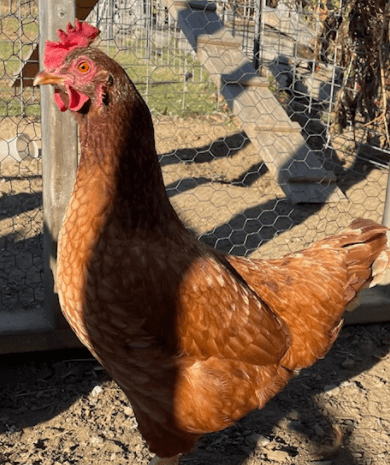
New Hampshire Reds are one of the chicken breeds I started out with and one of my favorites. The breed was created in New Hampshire and Massachusetts by Professor “Red” Richardson. Currently there are 2 strains of New Hampshire Red’s out there, traditional/heritage and production. It should also be noted that unfortunately the New Hampshire Red has made its way onto the Livestock Conservancy because of their decrease in numbers.
- Egg Color: Brown
- Eggs per Year: 240
- Dual Purpose: Yes
- Cold Hardy: Yes
- Temperament: Docile, fairly calm and overall pretty friendly. Occasionally aggressive and make great mothers for chicks.
OLIVE EGGER:
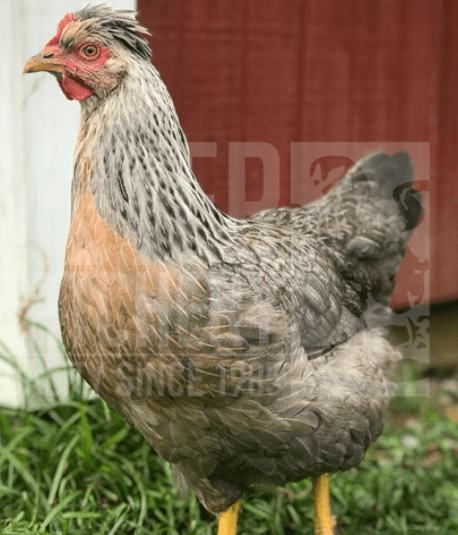
Olive Eggers are a newer breed that was developed by crossing a blue egg gene chicken (typically Ameraucanas) with a brown egg gene chicken (Marans or Wellsummers). Although the breed is not yet recognized as an official breed by the American Poultry Association, many hatcheries have reined their breeding programs to create strong genetics in this breed. Olive Eggers have grown immensely in popularity and have become one of the most common backyard chicken.
- Egg Color: Olive Green, sometimes light green or brown (10-15% chance)
- Eggs per Year: 260
- Dual Purpose: Yes
- Cold Hardy: Yes
- Temperament: Docile, friendly and overall great addition to any flock. Occasionally a little skittish.
Photo from Meyer Hatchery
EASTER EGGER:
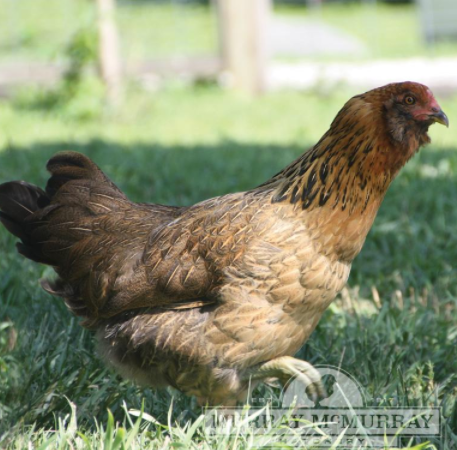
Easter Eggers are similar to the Olive Eggers where they are not recognized as an official breed. A lot of people confuse them with Americanas which are a cross between Araucanas and Ameraucanas (I know, there a ton of breeds and it gets confusing quick!). Americanas lay only blue eggs while Easter Eggers can lay blue, cream, brown or green eggs (hence the name Easter Egger and why they aren’t recognized as an official breed). Personally, I think they are one of the best chickens you can start out with, especially if you aren’t sure what color eggs you’d like to see from your flock and they are typically some of the friendliest birds in our flock.
- Egg Color: Blue, cream, pink, green, white or brown
- Eggs per Year: 280
- Dual Purpose: Yes
- Cold Hardy: Yes
- Temperament: Friendly, quiet, not overly cuddly but not aggressive either.
Photo from Murray McMurray Hatchery
BRINGING YOUR CHICKS HOME:
If you order your chicks online, you’ll be able to pick a ship date. The chicks will typically be delivered to your local post office a day or 2 after that ship date and MUST be picked up from the post office. USPS will not deliver chicks to your door. The best thing to do is to call your post office and let them know that the chicks are coming and to leave your number with them. That way you can bring the chicks home as soon as possible. I usually have my brooder all set up for the chicks the day they ship out. This way the brooder is warm and I don’t have to worry about scrambling to fill they’re food and water when they come home. The idea is to make the transition from the box to the brooder as stress free as possible.
FEED:
If you’ve ever been to Tractor Supply or your local Agway then you know how many different types of chicken feed there are. Organic, GMO free, mash, crumbles, medicated, the list goes on and on. In the end what feed you choose is your choice and there is no right or wrong answer. There are many pro’s and con’s to either organic or no organic feed. I hate to say it but the eggs taste the same no matter what feed you give your chickens. I will say that buying a medicated chick starter feed is highly recommended as it contains amprolium to help prevent coccidiosis, a common but fatal illness in young livestock. Cocci is nothing to be afraid of as it is easy to treat, but personally I’d prefer prevention over treatment.
TRANSITIONING FROM BROOD BOX TO COOP:
It can be hard to know when your chicks are ready to move from the brood box to the coop. The best rule of thumb is to make sure you can say yes to each of the questions below.
- Is it above 50 degrees at night?
- Are the chicks at least 6-8 weeks old?
- Are they just about fully feathered?
If you can answer yes to all of these questions, your chicks are ready to go outside. If you plan on free ranging your chickens, keep the chicks locked inside of the run for at least a week to get them used to where their home will be. There is nothing more frustrating then trying to get chickens out of the trees at night because they didn’t go back to the coop. If you have chickens already and are looking to introduce new chicks to the flock, I recommend creating their own space within the coop/run. Somewhere where the new chicks can see the older chickens but can’t actually interact with them. This will allow each flock to get a feel for one another and keeping the fighting to a minimum when you let them all out together. Two merging flocks will fight. There is a difference between figuring out the new pecking order and full blown fighting between chickens. Chickens may peck each other and even pull out a feather or two, that’s fine. If they continue to fight, that’s when I would step in and maybe separate the chickens.
EGG PRODUCTION:
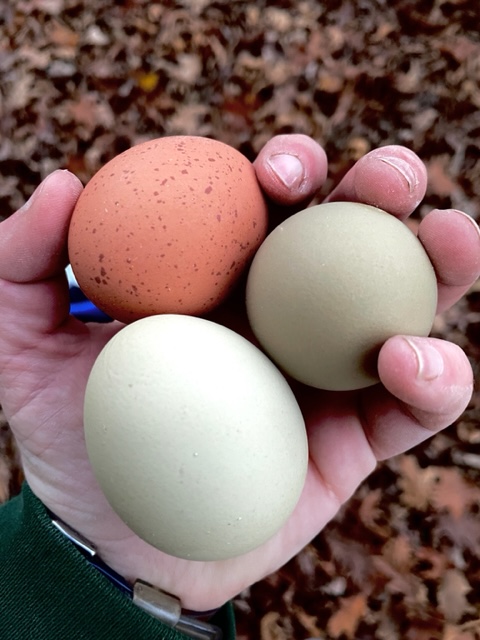
You’re chicks are in the coop, so when can you expect to get some eggs? Pullets (juvenile chickens), will typically start laying when they are around 6-8 months of age and will lay continuously for 12 months after that. After around 18-20 months, they will have their first molt and egg production will start to decrease every year. Molting can happen every year around fall as the hens get ready for winter.
COMMON ISSUES:
Predators and illness can cause real problems for your chickens. Some common illnesses include egg bound (egg stuck in the hen), frostbite, and pasty butt. These are all easy illnesses to treat, the key is in catching it early on. As for predators, they can be harder to deal with. The biggest concern is usually hawks. Having an enclosed run does wonders for keeping hawks from snatching up my chickens. Skunks, foxes, owls and fisher cats can also be a problem when it comes to keeping your flock safe. Making sure your chickens have an enclosed run, closing up the flock and night and regularly checking the run for holes under the fence goes a long way to preventing anything from attacking your chickens. For more on some of the common illnesses in chickens, visit our Poultry category, where we have in depth articles on what each of the illnesses are and how to treat and prevent them.
ROOSTERS:
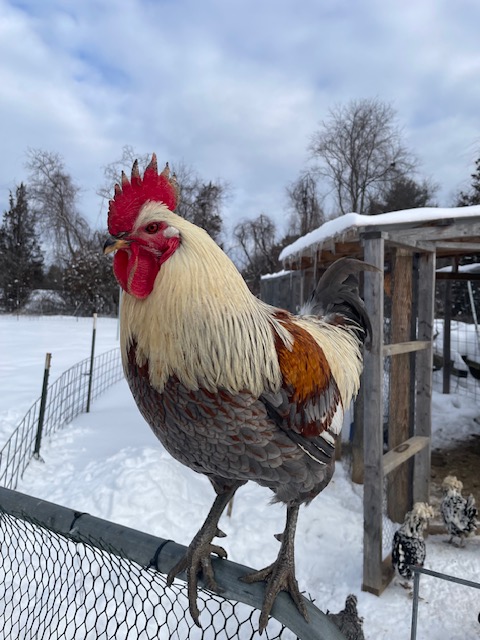
I have found that roosters can be an amazing addition to the flock or a complete nightmare. There are pros and cons to keeping a rooster but you do not need a rooster in order for your hens to lay an egg. Roosters naturally protect their hens from predators. I’ve seen roosters attack hawks that tried to grab one of the hens. If you plan on free ranging your flock, a rooster can be an excellent way to keep your flock safe. If you plan on hatching your own egg, you’ll also need a roo.
The most common issue I hear about roosters is that they are aggressive. Not all rooster are created equal. Some can be overall aggressive, going so far as to attack you when you go into the run/cop. This can be a huge issue, especially if you have children. I’ve had a few roosters over the years and only one has ever been aggressive towards me. Another issue with roosters is the noise. They are LOUD. Roosters will crow in the morning and sometimes in the afternoon as well. I personally love the sound, but others find it annoying. This is something to think about if you live closer to other people.
Not all towns allow roosters (or chickens). Check your town’s website for the ordinances on keeping livestock and poultry. If your town has an Ag Commission, reach out to them as they can help point you in the right direction. If you end up with unwanted roosters that you have no idea what to do with, The Goat Farm offers a drop off. We charge $5 per rooster and they can be dropped off anytime and left in one of our crates. For more information on our drop off system email us at thegoatfarmnh@gmail.com.
THE UNFORTUNATE SIDE OF KEEPING CHICKENS:
Sometimes there is nothing you can do for a chick or chicken and they die. The mortality rate in chicks is higher than adult chickens, with the highest mortality being in the first 10 days of life. There is a lot we can do to prevent this but sometimes things happen. The best way to dispose of the carcass is to bury it, put it into the compost pile or place it in the woods.
SUMMARY:
Chickens are so much fun to keep. You get fresh eggs that really do taste so much better than store bought and plenty of entertainment. There is always more to learn about raising chickens (and poultry in general). Raising any livestock can be trial and error, and the more experience you have the more knowledge you gain and the more confident you will feel. If you have any questions, email us! We’s love to help answer any questions you might have.
 THE GOAT FARM
Leave a comment